May 1, 2026
Asian Pacific American Heritage Month Reading List
Asian Pacific American Heritage Month is observed in May — chosen to commemorate the arrival of the first Japanese immigrants to the United States in May 1843 and the completion of the transcontinental railroad in May 1869, much of which was built by Chinese laborers. That history is in these six novels, alongside stories of war, family, food, memory, and the strange doubled life of living between two cultures.
The Departure Shelf is The Endpaper Society’s monthly reading list for travelers who want to go deeper.
The Joy Luck Club by Amy Tan
Setting: San Francisco and China, 1940s–1980s
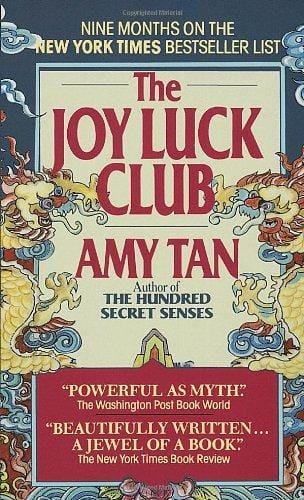
Four Chinese immigrant women and their American-born daughters, meeting weekly to play mahjong, tell each other the stories they’ve never told before. Tan’s debut novel is about the chasm between generations — the things that can’t be translated, the things that can’t be forgiven, the things that can only be understood when it’s almost too late.
Where it takes you: San Francisco’s Chinatown — the oldest in North America — carries the history of Chinese immigration in its architecture, its associations, and its temple. The parallel story, set in Shanghai and the rural south, points toward the real villages and cities where many Chinese-Americans’ family stories begin.
Pachinko by Min Jin Lee
Setting: Korea and Japan, 1910–1989
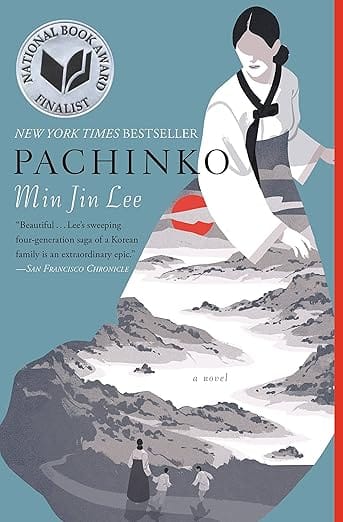
Four generations of a Korean family living in Japan under occupation, internment, and discrimination — and still building something that looks like a life. Lee spent thirty years researching the Zainichi Korean community (ethnic Koreans who have lived in Japan for generations and are still not fully accepted), and the novel carries the weight of all that research in every detail.
Where it takes you: Osaka’s Tsuruhashi neighborhood — the largest Korean community in Japan — is the atmospheric heart of this novel’s Japanese sections. Busan, in Korea, is where the story begins. The ferry route between them, which the novel’s characters take and re-take, is still operating and is one of the most atmospheric ways to understand the story geographically.
When the Emperor Was Divine by Julie Otsuka
Setting: Berkeley, California & a Utah internment camp, 1942–1945
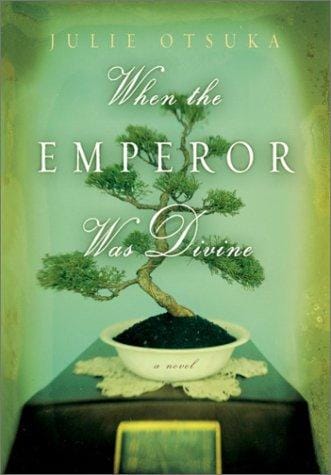
An unnamed Japanese-American family — mother, daughter, son, father — is forced from their Berkeley home into an internment camp following the attack on Pearl Harbor. Otsuka tells the story in five sections, five voices, five different experiences of the same shameful chapter of American history. It is seventy years old in subject and completely contemporary in feel.
Where it takes you: Topaz War Relocation Center in Utah — one of the ten internment camps — has a museum and interpretive site. Manzanar, in California’s Owens Valley, is a National Historic Site with a visitor center that tells this story with full honesty. Berkeley’s Japanese-American community history is documented in several local museums and through walking tours.
The Sympathizer by Viet Thanh Nguyen
Setting: Saigon and Los Angeles, 1975
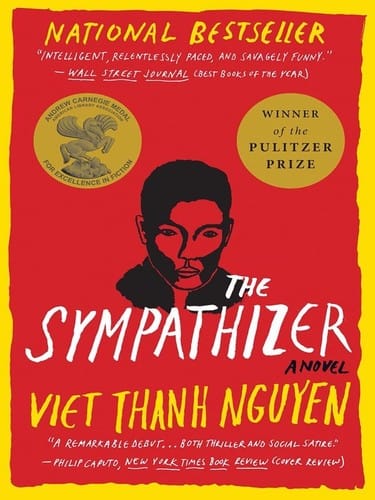
A Communist spy embedded in the South Vietnamese army flees to Los Angeles with the fall of Saigon and must continue his double life in America. Nguyen’s Pulitzer Prize–winning novel is narrated as a confession — sardonic, brilliant, and relentlessly observant about the absurdity of war, American exceptionalism, and the impossible position of the person who belongs to two sides of the same conflict.
Where it takes you: Ho Chi Minh City (Saigon) — the War Remnants Museum, the tunnels of Cu Chi, and the streets that changed their name but not their memory in 1975. Little Saigon in Westminster, California, is the largest Vietnamese diaspora community outside Vietnam, and it holds the other half of this story.
Everything I Never Told You by Celeste Ng
Setting: a small Ohio college town, 1970s
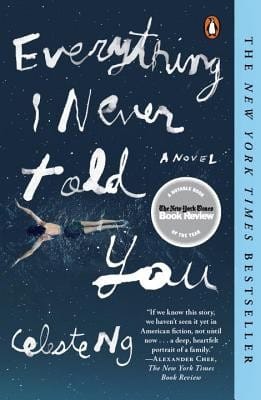
A mixed-race family in 1970s Ohio tries to understand why their golden daughter drowned in a lake. Ng’s debut is a mystery, a family portrait, and a dissection of the specific pressures placed on the children of interracial couples — the weight of everyone’s expectations, the cost of being the one who is supposed to make it all make sense.
Where it takes you: The American Midwest — specifically the college towns of Ohio — carries this quiet, domestic, devastating story. Ng grew up in Pittsburgh and draws on the particular texture of Rust Belt academic life in a way that anyone who grew up there will recognize immediately.
Crying in H Mart by Michelle Zauner
Setting: Eugene, Oregon & Seoul, South Korea
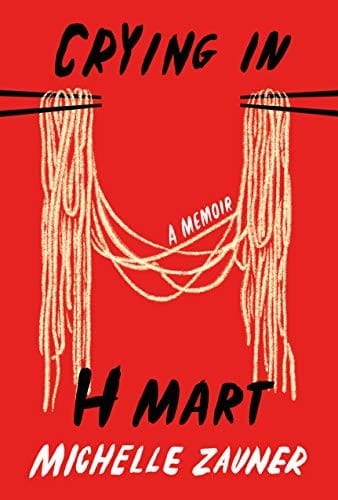
The Japanese Breakfast frontwoman writes about losing her Korean mother to cancer — and about the food that was the language between them. This memoir is about grief, about identity, about what it means to be half of something, and about the H Mart Korean grocery store as a portal to everything she was losing.
Where it takes you: Seoul — the food markets, the neighborhoods, the specific sensory world of Korean cuisine that Zauner describes in such loving detail. For anyone of Korean heritage or anyone who has ever lost someone and tried to hold onto them through cooking, this book is a pilgrimage waiting to happen.
Asian Pacific American literature is not a monolith — it spans dozens of countries, centuries, and experiences. These six books are six different entry points into a vast and vital tradition. Follow any of them far enough, and you’ll find yourself somewhere extraordinary.
Ready to plan a literary trip through Asia or the Pacific? Let’s talk.
Get the reading list first.
Trip announcements, curated reading lists, and the occasional dispatch — before anyone else.