June 9, 2026
Caribbean-American Heritage Month Reading List
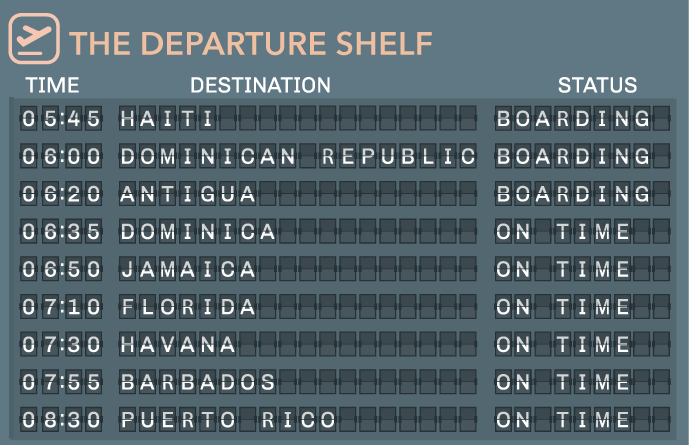
Caribbean-American Heritage Month is observed in June, and Caribbean literature is one of the great unrecognized traditions in the English-speaking world. It gave us Derek Walcott, Jamaica Kincaid, Edwidge Danticat, and Junot Díaz — writers whose work is rooted in specific islands, specific histories, specific weathers. These novels will take you somewhere. Let them.
The Departure Shelf is The Endpaper Society’s monthly reading list for travelers who want to go deeper.
Breath, Eyes, Memory by Edwidge Danticat
Setting: Haiti and New York City, 1980s
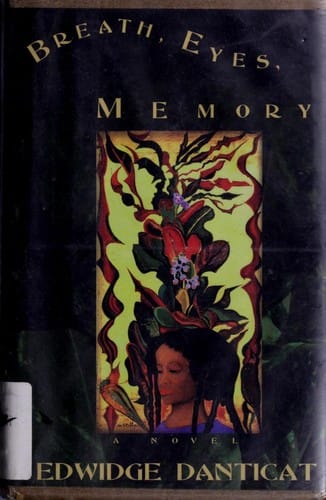
Sophie Caco leaves her grandmother’s house in rural Haiti to join the mother she barely knows in New York, and what follows is a story about the ways trauma passes between generations of women — sometimes as silence, sometimes as violence, always as love. Danticat, who came to America from Haiti at twelve, writes her homeland with the particular ache of someone who knows exactly what was left behind.
Where it takes you: Haiti — specifically the rural south, where the novel’s Haitian sections unfold in a landscape of cane fields and market towns that tourist itineraries don’t usually reach. The Haitian-American community in Brooklyn, particularly Flatbush, is where the novel’s American story lives.
Wide Sargasso Sea by Jean Rhys
Setting: Jamaica and Dominica, 1830s
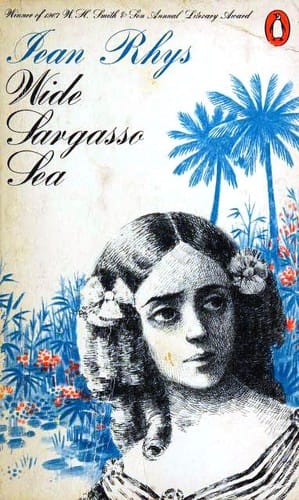
The untold story of Bertha Mason — the “madwoman in the attic” from Jane Eyre — given back her name (Antoinette Cosway), her history, and her voice. Rhys, who grew up in Dominica as the daughter of a Creole family, understood exactly what Charlotte Brontë had erased when she made Bertha foreign, mad, and voiceless. This prequel is one of the great acts of literary reclamation in the English language.
Where it takes you: Dominica — the most mountainous island in the Caribbean, with cloud forest that reaches down to the sea — is the least visited and most extraordinary of the Lesser Antilles. Rhys grew up there, and the landscape of her childhood is everywhere in this novel: the rivers, the rain, the heat that makes England’s cold feel like another planet.
The Brief Wondrous Life of Oscar Wao by Junot Díaz
Setting: Santo Domingo and New Jersey, 1940s–2000s
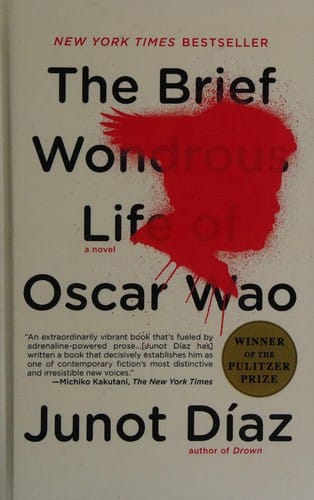
Oscar de León is an overweight Dominican-American nerd in New Jersey who wants nothing more than to fall in love and write fantasy novels. Díaz surrounds him with the history of his family — survivors of the Trujillo dictatorship — and with the fukú, the ancient curse that follows Dominican families across generations and oceans. It is a Pulitzer Prize–winning novel written in a linguistic register (Spanglish, nerd references, historical footnotes) that had never been attempted before.
Where it takes you: Santo Domingo — the oldest city in the Americas, with a colonial zone that is a UNESCO World Heritage Site and a city of extraordinary vitality underneath it. The Trujillo-era history that the novel circles around is documented in the Museo Memorial de la Resistencia Dominicana.
Annie John by Jamaica Kincaid
Setting: Antigua, 1950s–1960s
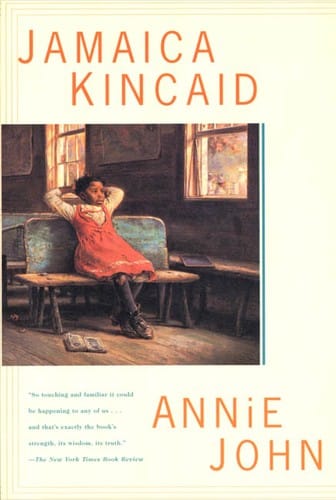
A girl grows up on Antigua, loves and fights with her mother, discovers her own separateness, and eventually leaves. Kincaid’s autobiographical novel is about colonial education, the complexity of mother-daughter love, and the specific experience of growing up on a small island in a big empire. It is one of the most precise coming-of-age novels ever written.
Where it takes you: Antigua — the actual island, with its English Harbour, its colonial legacy, and its extraordinary beaches that Kincaid’s novel refuses to let be merely picturesque. For readers who want to understand the Caribbean beyond the resort experience, this is the book to read before you go.
In the Time of the Butterflies by Julia Alvarez
Setting: the Dominican Republic, 1938–1960
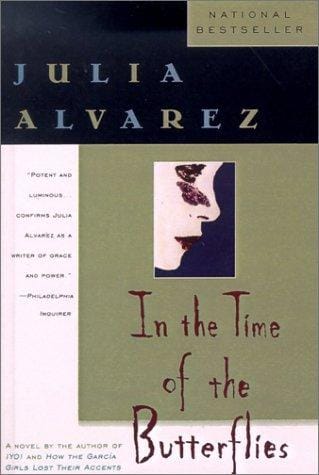
The Mirabal sisters — Patria, Dedé, Minerva, and María Teresa — were four women who became the most dangerous opponents of the Trujillo dictatorship. Three of them were killed by Trujillo’s secret police in 1960. Alvarez fictionalizes their lives in a novel that alternates among all four voices, asking: what does it take to become a revolutionary? What does it cost?
Where it takes you: The Dominican Republic’s Cibao Valley, where the Mirabal family grew up, and the museum dedicated to the sisters in their hometown of Salcedo (now called Hermanas Mirabal). November 25, the date of their assassination, is now the International Day for the Elimination of Violence Against Women.
Their Eyes Were Watching God by Zora Neale Hurston
Setting: Eatonville, Florida & the Florida Everglades, 1920s–1930s
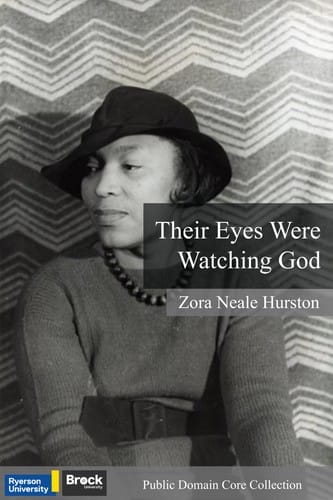
Janie Crawford tells the story of her three marriages and her search for self and love — narrated in the dialect of the all-Black Florida town where she grew up. Hurston, an anthropologist and folklorist who grew up in Eatonville, wrote this novel in seven weeks, drawing on the oral tradition she had spent years documenting. It was largely forgotten after her death and was rediscovered by Alice Walker, who campaigned to have it republished.
Where it takes you: Eatonville, Florida — the first incorporated all-Black town in America, still existing, north of Orlando. The Zora Neale Hurston Museum of Fine Arts is there, and the Zora! Festival celebrates her work every year. The Florida Everglades, where the novel’s devastating third section is set, is a landscape unlike any other in America.
The Caribbean is not a monolith — it is dozens of islands with dozens of histories, languages, and literatures. These six novels are six different entry points into that complexity. Follow any of them, and you’ll understand the islands in a way no travel brochure will ever offer you.
Ready to plan a Caribbean literary trip or heritage journey? Let’s talk.
Get the reading list first.
Trip announcements, curated reading lists, and the occasional dispatch — before anyone else.