April 1, 2026
Arab American Heritage Month Reading List
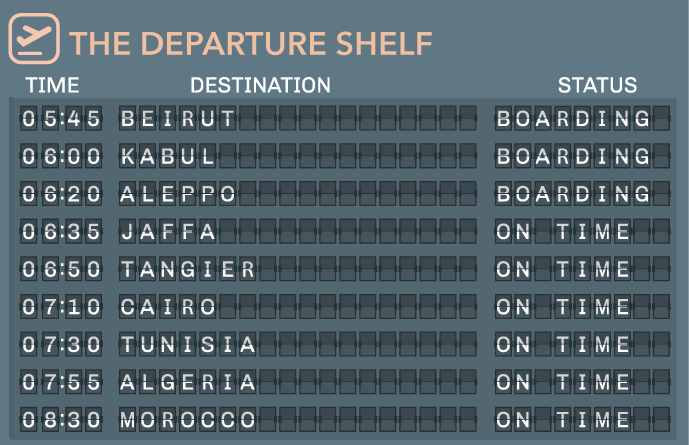
Arab American Heritage Month is observed in April, and it asks us to reckon with a literature that is among the richest in the world and among the most misrepresented. These six novels are not political documents — they are human ones. They are about families, memory, war, love, and the specific pain of watching a homeland become unrecognizable.
They are also about places. Real places. Places you can visit, walk through, and understand differently because you read the right book first.
The Departure Shelf is The Endpaper Society’s monthly reading list for travelers who want to go deeper.
Salt Houses by Hala Alyan
Setting: Palestine, Kuwait, Beirut, Paris, Boston, 1963–2014
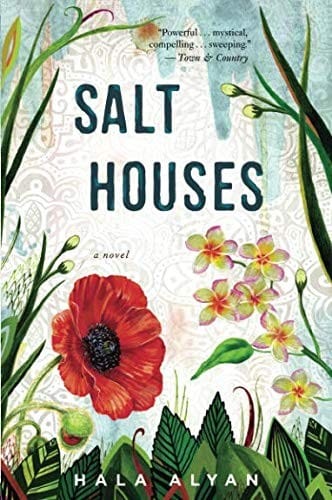
A Palestinian family is scattered across fifty years of displacement — from Nablus to Kuwait to Beirut to Paris to Boston — and Alyan follows four generations as they try to make sense of belonging when home keeps being taken away. Each chapter is a different country, a different decade, a different family member holding the same grief in a different language.
Where it takes you: Nablus, in the West Bank, is one of the oldest continuously inhabited cities in the world — and one of the least visited by Western travelers. Its old city, soap factories, and markets have survived everything thrown at them. This novel makes you want to understand it on its own terms.
The Kite Runner by Khaled Hosseini
Setting: Kabul, Afghanistan & San Francisco, 1975–2001
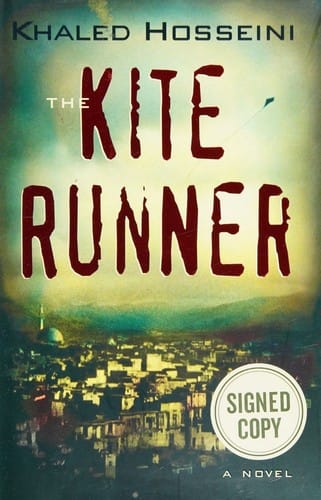
Amir and Hassan fly kites in a Kabul that no longer exists — a city before the Soviet invasion, before the Taliban, before everything. Hosseini’s debut is about guilt, redemption, and the Afghanistan that lives in the memory of its diaspora. Published in 2003, it introduced millions of Western readers to an Afghanistan they had never imagined.
Where it takes you: The Kabul of Hosseini’s childhood is documented in photographs, memoirs, and the memories of those who fled. For travelers interested in Central Asia, the pre-war culture of Afghanistan — its poetry, its music, its extraordinary landscape — is accessible through neighboring countries and through the Afghan diaspora communities of cities like Fremont, California, where Hosseini himself lives.
The Beekeeper of Aleppo by Christy Lefteri
Setting: Aleppo, Syria & the refugee trail through Turkey and Greece, present day

Nuri is a beekeeper. His wife Afra is an artist. The war destroys both of their worlds, and together they make the journey that millions of Syrians have made — across Turkey, across the Aegean, through Greece, toward an uncertain future. Lefteri, a British-Cypriot author who volunteered in Athens during the refugee crisis, writes with the authority of someone who was there.
Where it takes you: Lesvos, Greece — where so many refugee boats arrived — has become a site of both tragedy and resilience. The island’s refugee memorials, museums, and local organizations tell a story that the novel illuminates. Athens’ Exarcheia neighborhood, which became a center of refugee support networks, is equally extraordinary to walk through with this book in mind.
A Thousand Splendid Suns by Khaled Hosseini
Setting: Herat and Kabul, Afghanistan, 1960s–2000s
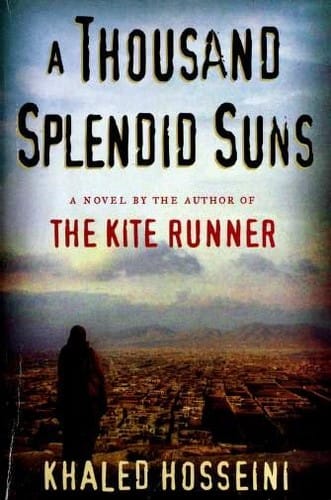
Two women, decades apart in age, bound together by circumstance and ultimately by love, survive the Soviet occupation, the civil war, and the Taliban — in a Kabul that transforms around them from a functioning city into a ruin. Hosseini’s second novel is about Afghan women specifically, and about the extraordinary endurance required to survive in a place that keeps trying to make you invisible.
Where it takes you: Herat, in western Afghanistan — the city of the title’s poem by the Mughal Emperor Babur — is one of the great historical cities of the Islamic world, home to minarets and tile work of extraordinary beauty. Its history, accessible through neighboring Iran and through scholarship, is a counterweight to every image of Afghanistan as only a place of war.
The Map of Salt and Stars by Zeyn Joukhadar
Setting: Syria and North Africa, present day and 1150s
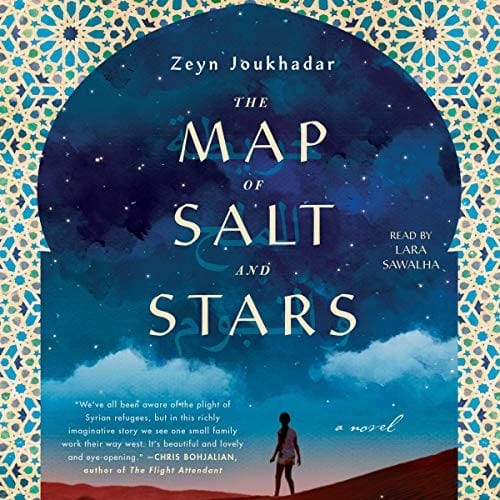
A twelve-year-old Syrian girl and her family flee Damascus in the present; an apprentice mapmaker follows a legendary cartographer across North Africa in the twelfth century. The two stories weave together across nine centuries of the same geography, suggesting that displacement and longing and home are not new inventions. Joukhadar writes with a poet’s ear and a geographer’s eye.
Where it takes you: The North African route the medieval story follows — from Morocco through Tunisia to Egypt — traces one of the great corridors of medieval Islamic scholarship and trade. Each city on the map is real, and each one has sites that the novel brings to life: the medinas of Fès and Tunis, the markets of Cairo.
American War by Omar El Akkad
Setting: American South and North Africa, 2075

In the near future, a second American Civil War has torn the country apart along oil and climate lines, and a family in the defeated South becomes a refugee family — learning what it means to be on the other side of the border crossing, the other side of the drone strike. El Akkad’s novel is a mirror held up to every war the West has exported, and it is deeply uncomfortable and necessary.
Where it takes you: The novel’s refugee camp — modeled explicitly on real camps in the Middle East and North Africa — forces a reckoning with what displacement actually looks like. El Akkad, an Egyptian-Canadian journalist who covered Guantánamo, Ferguson, and Standing Rock, knows exactly what he’s describing.
Arab literature is vast and old and alive. These six novels are a starting point — and so are the places they describe. If you’ve ever wanted to understand the Middle East through its stories rather than its headlines, these books are the beginning of that journey.
Interested in cultural travel to the Arab world or North Africa? Let’s talk.
Get the reading list first.
Trip announcements, curated reading lists, and the occasional dispatch — before anyone else.