May 14, 2026
Jewish American Heritage Month Reading List
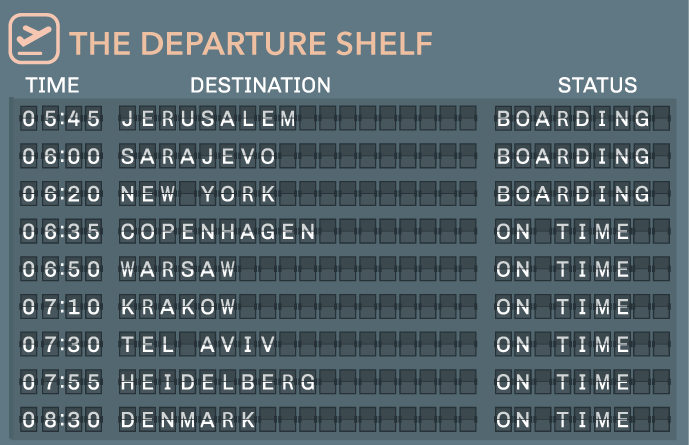
Jewish American Heritage Month falls in May, and it asks us to engage with a literature and a history that runs from ancient texts to last year’s headlines. The novels on this month’s Departure Shelf span centuries and continents — but they share a commitment to memory as an act of survival. In Jewish tradition, to tell the story is to keep it alive. These books are an argument for why that matters.
The Departure Shelf is The Endpaper Society’s monthly reading list for travelers who want to go deeper.
People of the Book by Geraldine Brooks
Setting: Sarajevo, Venice, Seville, Vienna, 1480–1996
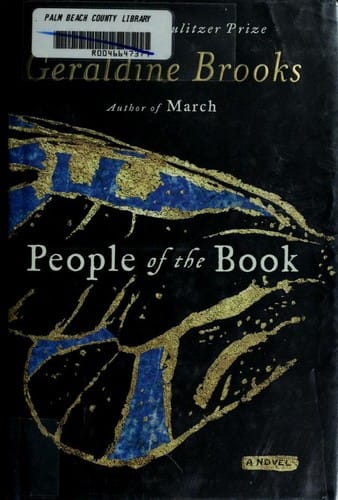
A rare book conservator is called to examine the Sarajevo Haggadah — a real fourteenth-century illuminated manuscript that survived the Inquisition, the Nazis, and the Siege of Sarajevo. Brooks tells the story backward through time, following the Haggadah from Bosnia to Bosnia, through every hand that saved it. It is one of the great novels about the persistence of beauty in the face of destruction.
Where it takes you: Sarajevo — where the actual Haggadah is housed in the National Museum of Bosnia and Herzegovina and can be viewed by appointment. The city itself, which survived a 44-month siege during the 1990s Bosnian War, is one of the most layered and undervisited cities in Europe.
The Chosen by Chaim Potok
Setting: Brooklyn, New York, 1940s
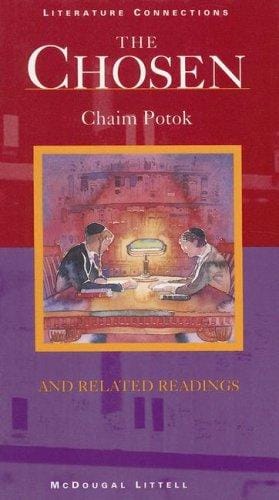
Two Jewish boys — one Hasidic, one Modern Orthodox — form an unlikely friendship in postwar Brooklyn, navigating the collision between their fathers’ worlds and their own ambitions. Potok’s novel is about the cost of tradition, the price of rebellion, and the specific texture of immigrant Jewish Brooklyn in the years when the Holocaust was news, not history.
Where it takes you: Crown Heights and Borough Park in Brooklyn still carry the Hasidic Jewish life Potok described — transformed and compressed but continuous. The Lower East Side of Manhattan, where earlier waves of Jewish immigrants landed, tells the story of the generation before these characters, and is walkable as a full literary-historical tour.
Exodus by Leon Uris
Setting: Cyprus, Palestine, and Europe, 1946–1948
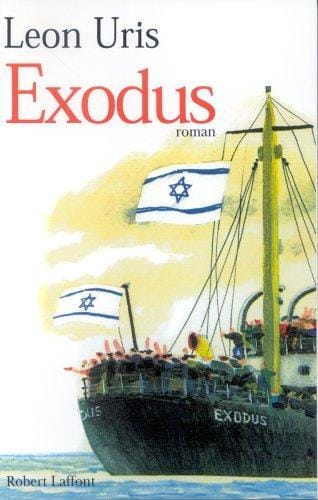
The founding of the state of Israel, told through the story of a Jewish refugee ship and the people on it. Uris’s 1958 novel shaped how an entire generation of American readers understood Zionism, the Holocaust’s aftermath, and the establishment of Israel. Whatever your politics, it is a document of a historical moment and a window into the beliefs that built a country.
Where it takes you: Israel — Tel Aviv, Haifa, the Galilee, the sites where the 1948 war was fought. Cyprus, where Jewish refugees were interned by the British, has its own chapter in this history. The actual ship Exodus 1947 is commemorated at Haifa’s port.
Number the Stars by Lois Lowry
Setting: Copenhagen, Denmark, 1943
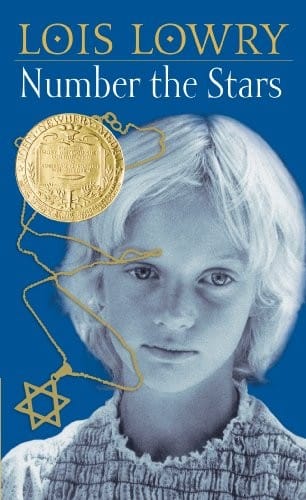
A ten-year-old Danish girl helps her Jewish best friend’s family escape to Sweden during the Nazi occupation. Lowry based the novel on true accounts of the Danish rescue — in which the majority of Denmark’s Jewish population was ferried to safety in fishing boats over a few October nights in 1943. It is a book for young readers that adults should never stop reading.
Where it takes you: Copenhagen — where the Danish Jewish Museum in the old Royal Boat House tells this story movingly and in full. The fishing village of Gilleleje, from which many of the boats departed, is a day trip from the capital and holds memorials to the rescue.
The Zookeeper’s Wife by Diane Ackerman
Setting: Warsaw, Poland, 1939–1945
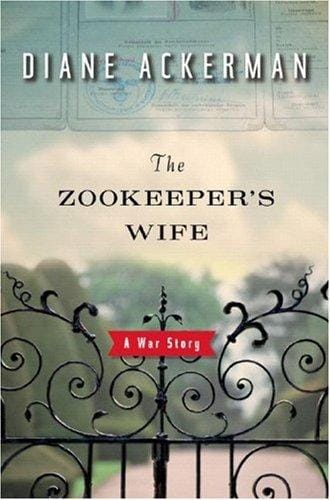
Jan and Antonina Żabiński used their bombed-out Warsaw Zoo as a hiding place for hundreds of Jews during the Nazi occupation — sheltering them in the animal cages, in their villa, in the basements. Ackerman reconstructed the story from Antonina’s wartime diary. It is a true story so extraordinary that fiction would never dare invent it.
Where it takes you: Warsaw’s Praga district — where the zoo still operates, now called the Warsaw ZOO, and where the Żabińskis’ villa still stands as a museum. The Warsaw Ghetto area across the river has memorials and the extraordinary POLIN Museum of the History of Polish Jews, one of the finest museum experiences in Europe.
The History of Love by Nicole Krauss
Setting: New York City and Poland, 1940s–present
A Holocaust survivor who escaped Poland as a young man has spent sixty years in New York believing that the woman he loved died in the war and that his book, written for her, was lost. Meanwhile, a teenage girl in the same city is trying to decode her dead father’s obsession with a book called The History of Love. Krauss’s novel is about loss, survival, and how stories survive the people who created them.
Where it takes you: The novel moves between New York and the Polish villages that survivors left behind — places that carry absence as much as presence. For anyone tracing Jewish ancestry in Poland, this novel is essential emotional preparation for what you might find (and not find) when you get there.
Jewish literature is inseparable from Jewish history, and Jewish history is inseparable from place. The sites in these books are real. Many of them are still standing. Some of them are gone, and that absence is also part of the story. Go with a book in your hand and let it tell you what to see.
Interested in heritage travel or literary trips through Europe? Let’s talk.
Get the reading list first.
Trip announcements, curated reading lists, and the occasional dispatch — before anyone else.