May 31, 2026
Pride Month Reading List
Pride Month commemorates the Stonewall Uprising of June 1969 — but queer history is much older than that night in Greenwich Village. It is in the cafés of Paris’s Left Bank, the beach towns of mid-century America, the bookshelves of every teenager who ever felt alone and found themselves in a novel. These six books map that history across a century and a continent.
The Departure Shelf is The Endpaper Society’s monthly reading list for travelers who want to go deeper.
Giovanni’s Room by James Baldwin
Setting: Paris, 1950s
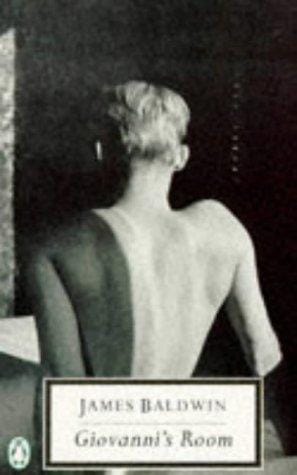
An American man in Paris falls in love with an Italian bartender while his fiancée is in Spain. Baldwin wrote this novel — his second, published in 1956 — in Paris, where he had gone to escape the racism and repression of America. It is a novel about shame as much as love, and about what happens when you choose the thing you think you’re supposed to want over the thing you actually are.
Where it takes you: Paris’s Saint-Germain-des-Prés neighborhood, where Baldwin lived and wrote, is still one of the great literary quarters of the city. The American expatriate Paris of the 1950s — the bars, the cafés, the cheap hotels on the Left Bank — is navigable as a literary tour through a city that offered freedom that America didn’t.
Call Me By Your Name by André Aciman
Setting: the Italian Riviera, 1983
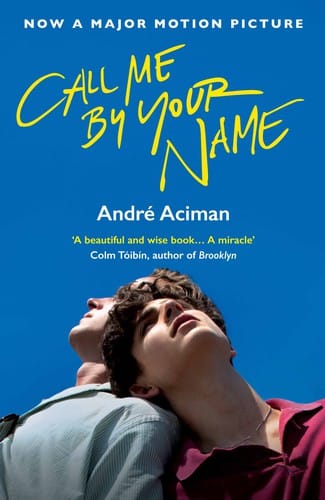
A seventeen-year-old boy falls in love with the twenty-four-year-old graduate student who comes to stay with his family for the summer, in a villa somewhere near Crema. Aciman’s novel is pure sensation — heat, desire, the length of a summer afternoon, the impossibility of this particular moment ever ending — and it has launched a thousand literary pilgrimages to northern Italy.
Where it takes you: The novel is set near Crema, in Lombardy, and the surrounding towns of the Bergamo area have become literary destinations since both the book and Luca Guadagnino’s film brought them to international attention. The Italian lakes — Como, Garda — carry the same particular quality of light the novel describes.
Carol by Patricia Highsmith
Setting: New York City and a road trip through the American Midwest, 1952
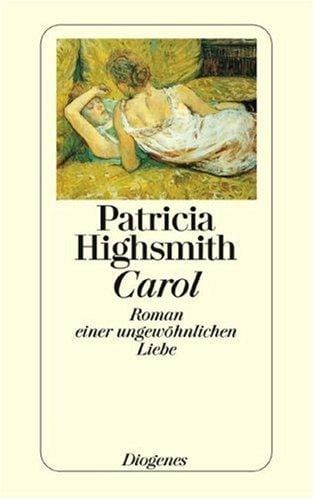
A young woman working in a department store meets an older, married woman buying a Christmas gift for her daughter. Published in 1952 under a pseudonym because Highsmith’s publisher refused to release it under her own name, Carol was the first lesbian novel with a happy ending — a revolutionary act in 1952 and still a quietly radical one. Highsmith based it on a brief encounter with a real woman she saw in a store.
Where it takes you: New York City in the early 1950s — the department stores, the restaurants, the particular geography of desire in a city where everyone is simultaneously visible and invisible. The road trip section, through Ohio and into the American heartland, traces a different kind of American geography: the wide middle of the country as a space of temporary freedom.
Fingersmith by Sarah Waters
Setting: London and the English countryside, Victorian era

A London orphan raised among thieves is recruited to participate in a con involving a sheltered heiress — and everything, with masterful precision, goes wrong. Waters’s Victorian thriller is as formally constructed as a locked-room mystery and as emotionally devastating as anything she’s written. The twist comes in the middle of the novel and changes everything you thought you understood.
Where it takes you: London’s Borough area (where the novel’s thieves’ kitchen is set) and the Gothic country houses of the Home Counties. Waters, a Welsh writer with a doctorate in Victorian literature, built her fictional world from deep historical research, and the result is a Victorian London that feels lived-in down to its gas lamps.
A Little Life by Hanya Yanagihara
Setting: New York City, present day
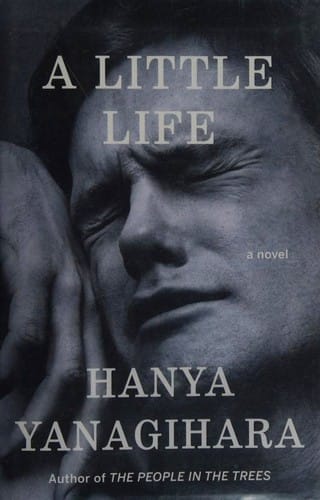
Four college friends from a Massachusetts college make their way to New York to build their adult lives. The novel slowly centers on Jude, the quietest of the four, and on the trauma that has shaped him in ways he refuses to name. This is not an easy novel — it is among the most emotionally demanding works of fiction published in this century — but it is also among the most profound in its exploration of what love actually looks like when it’s asked to do the impossible.
Where it takes you: Yanagihara’s New York is specific — SoHo lofts, the Columbia campus, the West Village streets that become Jude’s world — and for readers who live in or visit the city, the novel creates a double geography layered over the real one.
Fun Home by Alison Bechdel
Setting: Beech Creek, Pennsylvania & New York City, 1960s–1980s

Bechdel’s graphic memoir is about growing up in a funeral home in rural Pennsylvania with a father who was also, secretly, gay — and about discovering her own identity while his remained hidden from everyone, including himself. The title refers to what the family called the funeral home. It also refers to everything that wasn’t.
Where it takes you: Beech Creek, Pennsylvania — a small town in the Pennsylvania wilds — is where the family house still stands. The novel’s second geography is New York City, where Bechdel came of age as a lesbian artist in the 1980s, and specifically the women’s bookstore where she first found community and language.
Queer history is travel history — of exile and migration, of cities that offered freedom that home towns couldn’t, of bars and bookshops that served as the first communities for people who had never had one. These novels are maps of those journeys.
Interested in LGBTQ+ heritage travel or literary city trips? Let’s talk.
Get the reading list first.
Trip announcements, curated reading lists, and the occasional dispatch — before anyone else.