June 19, 2026
Immigrant Heritage Month Reading List
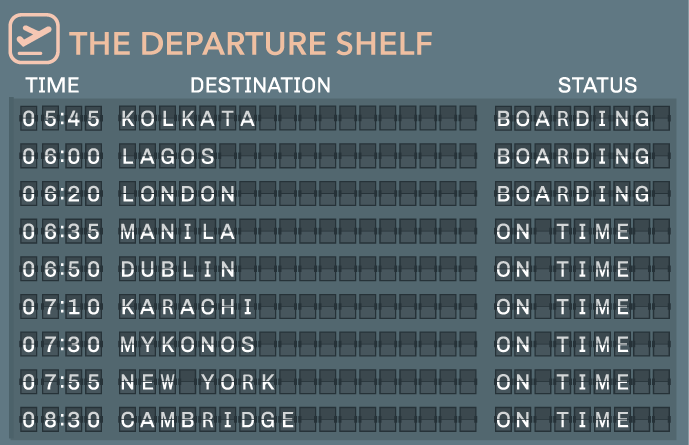
Immigrant Heritage Month is observed in June, and these six novels span six different journeys — from India to New York, Nigeria to London, Afghanistan to everywhere, Pakistan to America, Jamaica to England, and Ireland to Brooklyn, again. Each one is a different answer to the same question: what do you carry, and what do you leave behind?
The Departure Shelf is The Endpaper Society’s monthly reading list for travelers who want to go deeper.
The Namesake by Jhumpa Lahiri
Setting: Kolkata and Boston/New York, 1960s–2000s
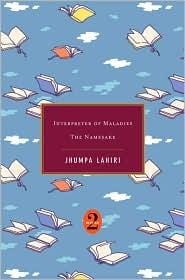
The Ganguli family immigrates from Calcutta to Cambridge, Massachusetts, and spends the next three decades navigating the gap between the life they left and the life they’re building. Their son Gogol — named after a Russian writer in a moment of crisis, the wrong name that becomes his whole identity — grows up between two worlds and belongs fully to neither. Lahiri’s prose is measured and heartbreaking.
Where it takes you: Kolkata — where Lahiri’s family is from — is one of the great literary cities of India, home to Tagore’s house and the old British imperial infrastructure that still structures much of the city’s geography. The novel’s American sections unfold across the intellectual communities of Cambridge and New York that welcomed the first wave of Indian professionals.
Americanah by Chimamanda Ngozi Adichie
Setting: Lagos, Nigeria & the United States & London, 1990s–present
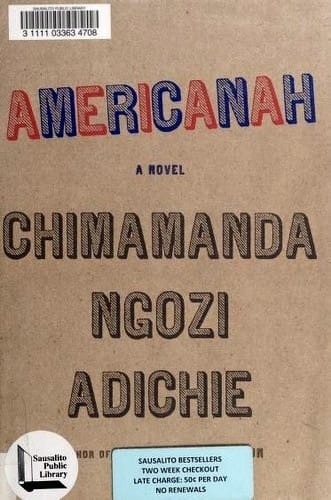
Ifemelu and Obinze grow up in Lagos and plan to leave together. He ends up in London, undocumented; she ends up in America, building a successful blog about race and the African experience. They don’t see each other for thirteen years. Adichie’s novel is a love story and a diagnosis — of what America does to Africans, of what England does to Nigerians, of the specific experience of becoming “Black” for the first time in a country that needs that category.
Where it takes you: Lagos — one of the most dynamic cities in the world, a megalopolis of twenty million people with a literary and artistic scene that is attracting international attention. Also: the immigrant neighborhoods of Philadelphia and Baltimore where Ifemelu lives her early American life, and London’s Peckham, where the West African immigrant community thrives.
Exit West by Mohsin Hamid
Setting: an unnamed Middle Eastern city, then a series of refugee transit points, then London and San Francisco
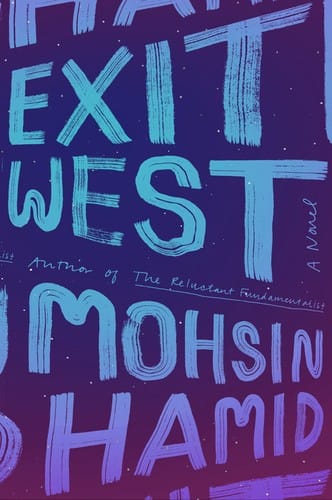
Two people fall in love in a city on the brink of civil war, and then the doors appear — magical portals that move refugees across the world, collapsing distance into a single step. Hamid’s novel uses the metaphor to strip the refugee experience down to its emotional core: you leave because you must, you arrive somewhere new, and you spend the rest of your life rebuilding identity from what you brought and what you find.
Where it takes you: The novel’s unnamed city is clearly drawn from Lahore and cities like it in Pakistan and the Middle East. The transit camps the characters pass through — on a Greek island, in a London squat — map onto real geographies of displacement. Hamid’s choice to name no city is a deliberate political act: this is every city, every journey.
White Teeth by Zadie Smith
Setting: London, 1970s–1999

Two old friends — an Englishman and a Bangladeshi man who met in the last days of the Second World War — raise their families in the same North London neighborhood over thirty years of British multiculturalism. Smith’s debut, published when she was twenty-four, is a comedy of immigrant life that somehow manages to be simultaneously satirical and deeply sympathetic, with the energy of a city that is always becoming something new.
Where it takes you: Willesden and Cricklewood in North London — the unfashionable inner suburbs where first- and second-generation immigrants built communities that London couldn’t have survived without. Smith’s novel is the literary document of this neighborhood that tourism has never bothered to look at.
America Is Not the Heart by Elaine Castillo
Setting: the Bay Area, California, 1990s
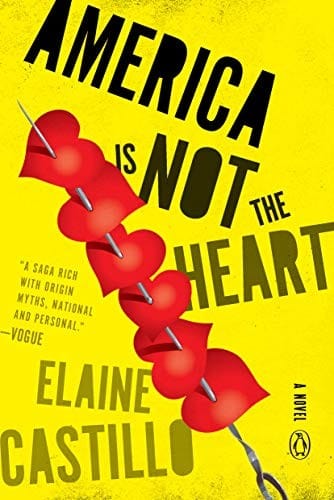
Hero De Vera arrives in California from the Philippines — where she has survived things she’s not going to talk about — and moves into the crowded house of her uncle’s family in Milpitas. Castillo’s debut is dense with Ilocano, Tagalog, and Bay Area geography, and it tells the story of Filipino-America with a specificity and love that the community had not seen in American literary fiction before. It is also about queerness, about family, about what bodies carry.
Where it takes you: The South Bay — Milpitas, Daly City, Vallejo — where the largest Filipino-American communities in the country live. This is not tourist California. It is working California, immigrant California, the California that makes the rest of it function.
Brooklyn by Colm Tóibín
Setting: Enniscorthy, County Wexford, Ireland & Brooklyn, New York, 1950s
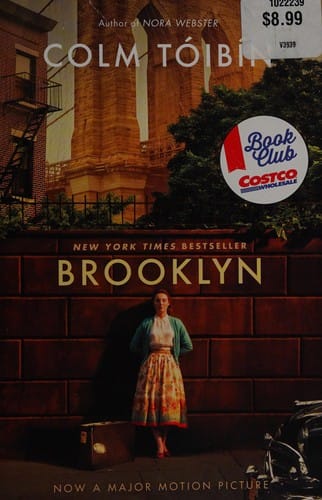
Eilis Lacey leaves Ireland for a new life in Brooklyn, and the novel is about what immigration actually feels like from the inside — not adventure but slow erosion of one self and uncertain construction of another. Tóibín’s prose is so precise it feels like watching someone hold a breath for two hundred pages. Eilis’s story is the story of every person who ever left somewhere for somewhere better, and could never fully explain to anyone back home what either place actually was.
Where it takes you: The Irish neighborhoods of Brooklyn — Sunset Park, Park Slope, Bay Ridge — that received wave after wave of Irish immigration across two centuries. Enniscorthy, County Wexford, where Eilis begins, is a beautifully preserved Irish market town that the novel has put permanently on the literary map.
Immigration is not a single story. It is six stories, or sixty, or six million — each one particular and each one containing the same ache: the place you came from, the place you’re going, and the long road between them that never quite gets walked.
Planning a heritage journey or literary trip? Let’s talk.
Get the reading list first.
Trip announcements, curated reading lists, and the occasional dispatch — before anyone else.